
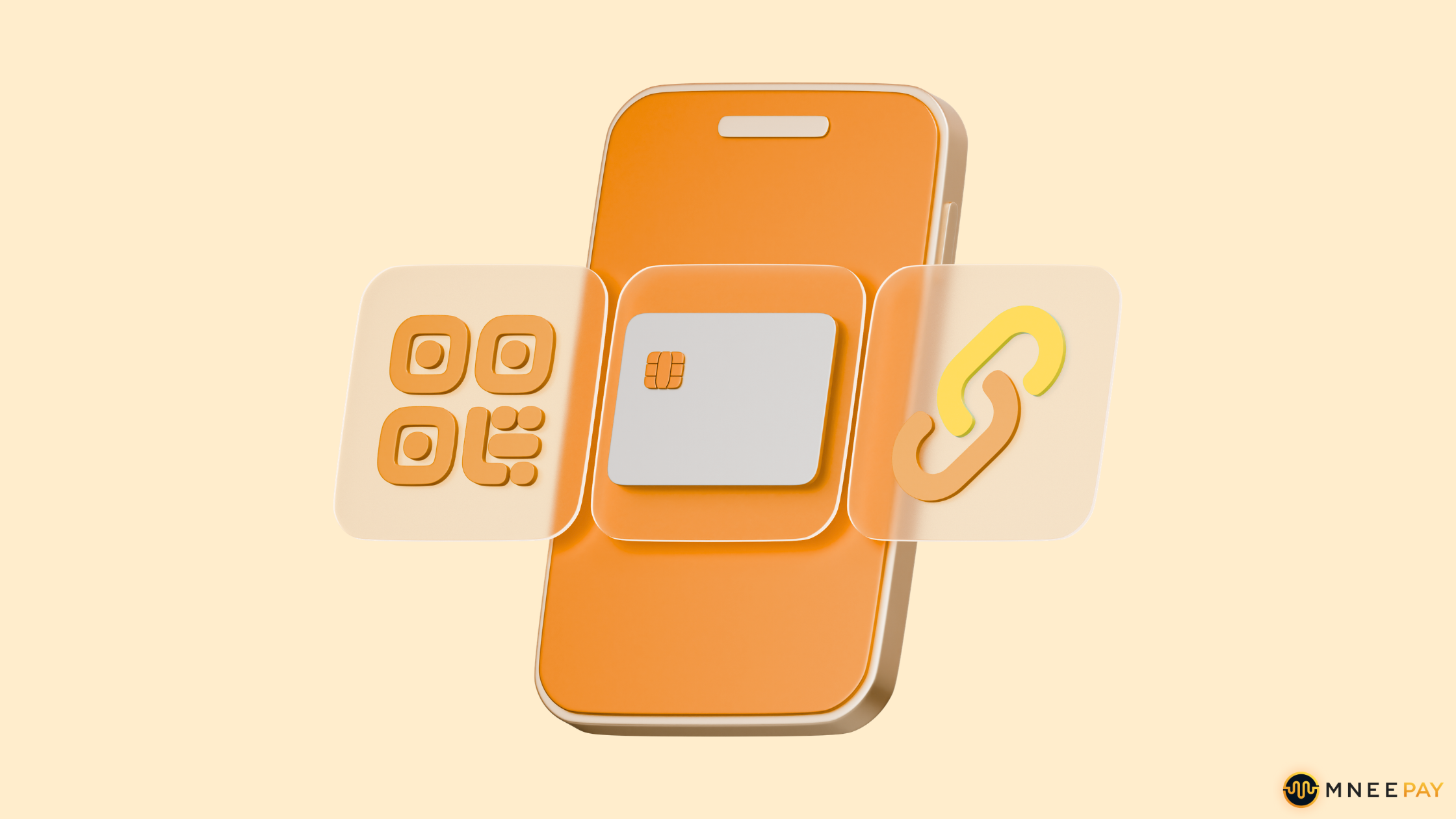
Your online and in-store payments don't talk to each other. That's not omnichannel. That's two businesses.
Most merchants running both physical and digital channels are managing two separate payment stacks. The operational cost is invisible until you add it up.
Omnichannel commerce requires payment systems that sync across channels. Most merchants are running fragmented stacks that don't integrate cleanly. A unified payment layer reduces complexity, reconciliation time, and operational overhead.
The word omnichannel sounds like an achievement. Multiple channels, unified experience, seamless customer journey.
The reality, for most multi-channel merchants, is four dashboards open at once and a finance team spending Friday afternoon reconciling discrepancies between systems that were never designed to talk to each other.
Your e-commerce platform uses one payment gateway. Your physical point-of-sale terminal runs on a different processor. Your accounting software pulls from both, but the data fields don't map cleanly, so someone is manually cleaning the export every month. Your customer's purchase history exists in two separate databases, neither of which the other can read in real time.
This isn't a technology failure. It's the predictable outcome of building out payment infrastructure incrementally, adding tools as needs arose, optimizing each one locally without asking whether the whole system made sense.
What omnichannel costs
The costs of fragmented payment infrastructure don't show up on a single line item, which is part of why they persist.
There's the direct time cost: staff hours spent on reconciliation, dispute resolution across multiple systems, and managing separate reporting workflows. For a business with meaningful volume across multiple channels, this is often a part-time or full-time role that exists solely because the payment systems don't talk to each other.
You sold the product. The customer kept it. You lost the money. Here's why the chargebacks are broken.
There's the decision quality cost: when your inventory and sales data don't reflect in real time across channels, you're making restocking, staffing, and promotion decisions based on incomplete information. The cost of those suboptimal decisions is real but hard to attribute directly to payment fragmentation.
There's the customer experience cost: a customer who bought in-store last week and is now calling about an online order exists in two separate records. Your team can't see the full relationship. That affects service quality, retention, and upsell capability.
When you add these up, the invisible cost of payment fragmentation frequently exceeds the visible cost of processing fees.
Why omnichannel is harder than it looks

Every payment vendor promises integrations. Most deliver them. The problem is that an integration isn't the same as a unified system.
Integrations sync data on a schedule, which means your real-time view is never actually real-time. They map fields imperfectly, because different systems use different data models for the same concepts. They break when the system updates. And they require ongoing maintenance by someone who understands both platforms.
The integration layer is the most expensive part of the modern payment stack, in aggregate, and it's the part nobody ever sells you upfront.
The common "best practice" here is to pick a primary platform and build everything around it. POS-first. E-commerce-first. Whatever your dominant channel is, make that the center and integrate everything else into it. This works better than pure fragmentation.
But it still doesn't solve the underlying problem: you're paying multiple vendors, maintaining multiple integrations, and managing multiple fee structures for what should be a single function.
What a unified payment layer looks like
The concept is straightforward even if the execution has historically been difficult. One payment infrastructure, one fee structure, one settlement ledger, operating across all your channels.
A customer pays online. A customer pays in-store. Both transactions hit the same system, settle to the same account, and appear in the same reporting dashboard. No reconciliation required. No integration maintenance. No separate dispute workflows.
This is what crypto-native payment infrastructure can deliver for merchants willing to build it into their stack. Because blockchain payments don't have different versions for physical and digital commerce, the same transaction mechanism works at a terminal or in a checkout flow. The settlement infrastructure is identical because it's the same infrastructure.
We've seen merchants describe the reconciliation benefit as more compelling than the fee reduction, particularly the operational complexity level they're managing. When your finance team stops spending half their Friday on payment reconciliation, that time goes somewhere more valuable.
Building toward simplicity in 2026
The merchant payment stack has been getting more complex for a decade. More channels, more tools, more integrations, more maintenance. The complexity compounds because every new capability gets added on top of existing infrastructure rather than replacing it.
The question worth asking in 2026 is whether you're adding to that complexity or starting to reduce it.
Adding a crypto payment option to a fragmented stack adds complexity in the short term. That's true, and worth acknowledging. The value case has to be clear before you do it.
But the right implementation, one where crypto payments are part of a unified layer rather than yet another silo, does the opposite. It simplifies. It reduces the number of settlements you're tracking. It gives you one consistent reporting view across payment types. It starts you on a path toward the unified payment infrastructure that omnichannel commerce requires.
The businesses that get there first will have a structural operational advantage. The question is how long you want to keep reconciling spreadsheets before you decide the status quo isn't worth defending.