
Payment security and compliance: what to ask any payments provider
Learn how to evaluate payment security and compliance, including key questions about KYC, authentication, data protection, and regulatory standards.
The payments industry has never had a shortage of vendors claiming to offer strong payment security and compliance. Those words show up in nearly every pitch deck, on nearly every product page, backed by varying degrees of substance. For merchants evaluating a new payment method, finding providers who claim to take security seriously isn't the challenge. Knowing which questions to ask to find out if they actually do is a different matter, especially when evaluating payment provider security and compliance practices.
Stablecoin payments draw extra scrutiny here. The technology is relatively new, the regulatory environment is still taking shape in many markets, and the consequences of choosing a provider who isn't properly positioned on compliance can range from operational disruption to significant legal exposure.
Here are the questions worth asking, and what good answers actually look like:
Who verifies the businesses on your platform?
If another business using the same payment platform turns out to be operating fraudulently, that reflects on everyone sharing that platform. It's a fair due diligence question, and the answer tells you a lot about how seriously a provider takes its compliance obligations.
What you want to hear: that business verification is handled by a recognized compliance partner, that the process is substantive rather than rushed for onboarding speed, and that payment settlement is blocked until verification is approved. That last point matters a lot. A system that lets payments flow before verification is complete isn't compliant in any meaningful sense.
MNEE Pay uses Sumsub, a widely trusted business verification platform, for merchant onboarding. Payment settlement is blocked at the backend level, not just in the UI, until verification is complete.
How do you protect access to my account?
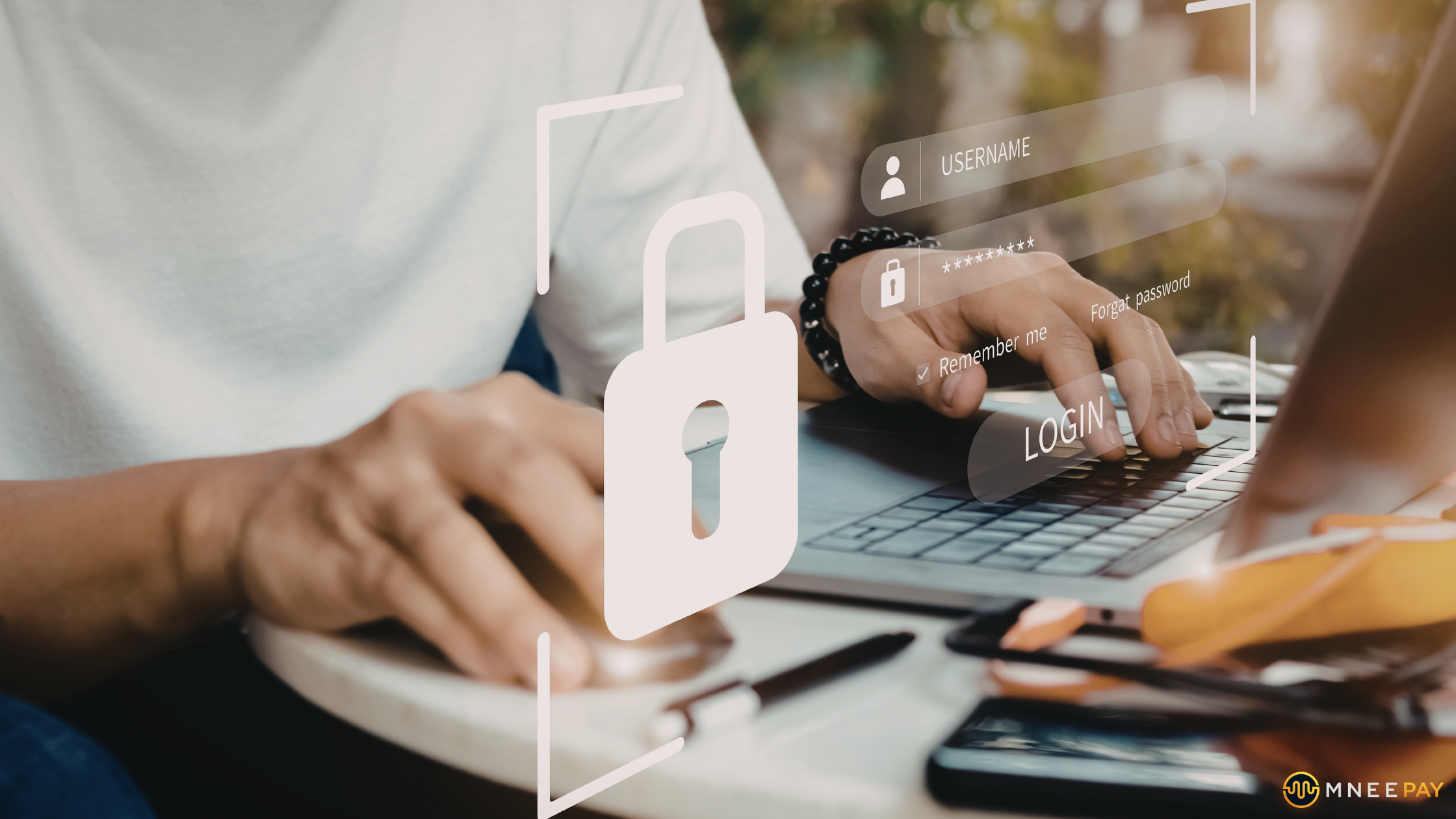
Merchant dashboards control payouts, settlement data, and integration settings. Account takeover is a real and targeted threat in fintech, and password-based authentication is the primary attack vector. Any provider still relying on a traditional password plus a text message code is operating on infrastructure that was already outdated years ago.
What you want to hear: that the provider uses modern, phishing-resistant authentication. Specifically, passkeys based on the FIDO2/WebAuthn standard. Passkeys replace passwords with device-bound cryptographic keys verified via biometrics or a device PIN. They can't be phished, can't be reused across accounts, and don't require you to remember or manage anything.
MNEE Pay uses passkeys as the default authentication method for all merchant dashboard access. Login takes seconds via Face ID, Touch ID, or your device PIN. High-risk actions like withdrawing to a bank account require re-authentication before they proceed.
What payments compliance standards does your
platform align with?
Security and compliance aren't the same thing, though they're closely related. For a payments provider, the relevant standards include SOC 2 for data security and operational controls, FIDO2/WebAuthn for authentication, and where applicable, alignment with frameworks like FATF Travel Rule requirements for crypto transactions and MiCA regulations for businesses operating in or serving EU markets.
What you want to hear: a specific, honest answer that names the standards already in place, distinguishes those from standards in progress, and acknowledges the regulatory landscape rather than waving it away.
MNEE Pay's compliance posture is built on established AML compliance requirements and financial regulatory standards. Authentication aligns with FIDO2/WebAuthn specifications and SOC 2 expectations. Compliance wasn't layered on after the product was built. It was part of how the product was designed.
What happens to my transaction data?
A payments provider processes sensitive business data: transaction volumes, customer wallet addresses, settlement amounts, and depending on the integration, customer names and shipping details. How that data is stored, who has access, and how long it's retained are all questions worth asking.
What you want to hear: that all network traffic is encrypted, that access to sensitive data is restricted and logged, and that retention follows defined policies rather than indefinite storage by default.
Does the payment provider maintain a clear audit trail?
Compliance isn't only about meeting requirements right now. It's about being able to demonstrate you met them when a question comes up later. For merchants, that means your payment provider needs an auditable record of key events: verifications, state changes, blocked actions, and transaction history.
What you want to hear: that the provider maintains immutable logs of compliance-relevant events, that those records are accessible for your own audit purposes, and that the system was designed for accountability rather than just operational convenience.
Payment security and compliance are a feature, not a footnote
The right payments provider isn't one who treats compliance as a cost center and security as a marketing checkbox. It's one who has made both a foundational design decision, so that when your own auditors, regulators, or enterprise customers ask how your payment infrastructure is secured, you have a real answer ready.
Asking these questions before you sign isn't excessive due diligence. It's the minimum standard for any business that takes its financial operations seriously.
MNEE Pay is built on a compliance-first infrastructure, with business verification through Sumsub, passkey authentication as the default login method, and backend enforcement of all compliance controls. Book a demo.
Chelsea Lai
Chelsea Lai is a Growth Marketing Manager focused on the intersection of stablecoins, crypto payments, and real-world business adoption. Her work is centered on breaking down complex concepts like blockchain payments and digital assets into clear, practical insights that merchants can actually use. She’s particularly interested in how stablecoin payments are reshaping global commerce by reducing friction, lowering costs, and making cross-border transactions more seamless.